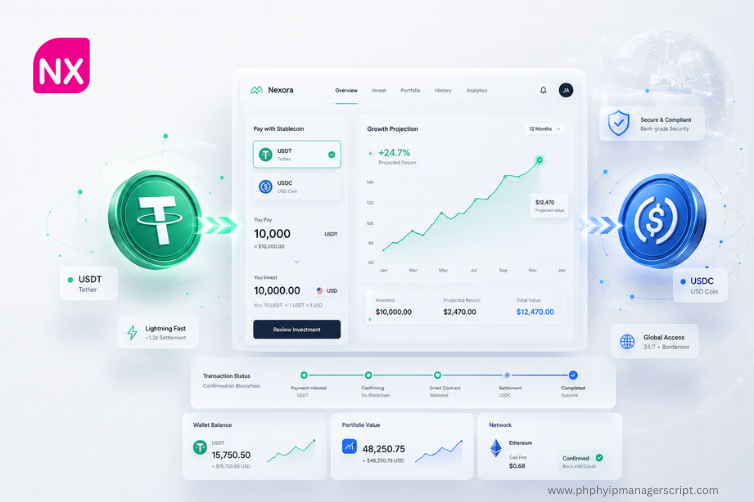
Stablecoins transformed digital payments in 2026, processing over $28 trillion in annual transactions globally. An investment platform with stablecoin payments eliminates cryptocurrency volatility concerns while delivering blockchain benefits—instant settlements, minimal fees, and borderless accessibility. This comprehensive guide reveals how integrating USDT, USDC, and other stablecoins revolutionizes investment platform operations.
What Makes Stablecoin Payments Essential in 2026
Traditional payment processors impose geographic restrictions and excessive fees that strangle platform growth. Banks charge 2.9-3.5% per transaction plus fixed fees, while international wire transfers demand $25-50 and require 3-5 business days for settlement. These limitations create friction preventing smooth user experiences.
Stablecoins solve these challenges through dollar-pegged digital assets operating on blockchain networks. Tether (USDT) and USD Coin (USDC) maintain 1:1 parity with the US dollar, eliminating the price fluctuations that deterred businesses from accepting Bitcoin or Ethereum. Users gain cryptocurrency advantages—speed, low costs, global reach—without volatility risks.
Investment platforms adopting stablecoin infrastructure report 95% reductions in payment processing costs. Transaction fees drop from percentage-based charges to flat $0.50-$2 costs regardless of amount. A $10,000 deposit costing $350 through traditional processors incurs less than $2 via stablecoins. This dramatic difference flows directly to platform profitability or enables more competitive user pricing.
The Stablecoin Advantage for Investment Platforms
Transaction speed represents another transformative benefit. Traditional bank transfers settle in 2-3 business days, creating anxiety during the waiting period when users cannot invest or withdraw funds. Stablecoin transactions confirm within 10-60 minutes depending on blockchain network congestion, with some networks achieving sub-second finality.
This immediacy improves conversion rates substantially. Users deposit funds and invest immediately rather than abandoning transactions during multi-day wait periods. Psychology research demonstrates that transaction friction increases abandonment rates exponentially—each additional step or delay loses potential customers. Instant stablecoin processing eliminates this friction.
Global accessibility expands addressable markets dramatically. Traditional banking excludes billions of people worldwide lacking bank accounts or living in countries with restricted financial systems. Stablecoins require only internet access and a cryptocurrency wallet—barriers far lower than traditional banking requirements. Investment platforms accepting stablecoins instantly access global markets traditional systems cannot serve.
Operating 24/7 without banking hour limitations proves crucial for international platforms. Markets never sleep, and users across time zones expect always-available services. Stablecoins process transactions continuously unlike banks closing evenings, weekends, and holidays. This constant availability matches user expectations in always-on digital economies.
Technical Infrastructure for Stablecoin Integration
Implementing stablecoin payments requires specific technical components working harmoniously. Wallet management systems form the foundation, generating unique deposit addresses for each user while maintaining operational security. Quality HYIP scripts include native stablecoin wallet functionality, eliminating expensive custom development.
Multi-chain support accommodates diverse user preferences. USDT operates on Ethereum, Tron, Binance Smart Chain, and other networks. Users hold stablecoins on preferred blockchains, and platforms supporting multiple chains maximize accessibility. Ethereum offers maximum decentralization but higher fees, while Tron provides sub-dollar transactions with faster confirmation times.
Smart contract integration enables advanced automation. Platforms can implement automated payment splitting, escrow functionality, or complex payout schedules through programmable smart contracts. These capabilities create competitive advantages impossible with traditional payment rails.
Blockchain node infrastructure provides direct network connectivity. Platforms either run dedicated nodes for complete control or use node service providers like Infura for managed reliability. Node access enables monitoring incoming transactions, broadcasting outgoing payments, and verifying blockchain states independently.
Popular Stablecoins and Their Use Cases
Tether (USDT) dominates stablecoin markets with over $140 billion in circulation. Its widespread acceptance and deep liquidity make USDT the default choice for most platforms. However, USDT faces ongoing regulatory scrutiny regarding reserve transparency, creating preference for alternatives among compliance-focused operators.
USD Coin (USDC) offers regulated alternative backed by fully-reserved dollar deposits audited monthly. Institutions and compliance-conscious platforms prefer USDC’s transparent reserve backing and regulated issuer structure. USDC operates across major blockchains providing flexibility matching USDT while addressing regulatory concerns.
DAI represents decentralized stablecoin alternative backed by cryptocurrency collateral rather than fiat reserves. While smaller in market capitalization, DAI appeals to decentralization advocates valuing censorship resistance. DAI’s algorithmic peg maintenance creates different risk profiles than fiat-backed alternatives.
Emerging stablecoins including BUSD (Binance USD) and TUSD (TrueUSD) compete through various differentiators. BUSD integration with Binance ecosystem provides advantages for platforms targeting that exchange’s users. TUSD emphasizes transparency through real-time reserve attestations.
Implementation Strategy for Investment Platforms
Payment gateway selection determines implementation complexity and ongoing costs. Specialized cryptocurrency payment processors like CoinPayments, NOWPayments, or Coinbase Commerce provide turnkey stablecoin acceptance. These services handle blockchain complexity, providing simple APIs for platforms without deep cryptocurrency expertise.
Direct blockchain integration offers maximum control and lowest long-term costs. Platforms interact directly with blockchain networks, eliminating third-party fees and dependencies. This approach requires technical sophistication but proves most economical at scale. Modern HYIP software includes stablecoin integration, simplifying direct implementation.
Hybrid approaches balance control and convenience. Platforms might use payment processors for deposits while implementing direct blockchain withdrawals. This combination simplifies user onboarding through processor-provided fiat on-ramps while minimizing ongoing withdrawal costs through direct processing.
User experience design determines adoption rates. Clear documentation explaining stablecoin deposits, video tutorials showing wallet setup, and responsive support helping users through first transactions prove essential. Many potential users lack cryptocurrency experience, requiring educational resources alongside technical functionality.
Regulatory Compliance for Stablecoin Platforms
Stablecoin regulations evolved significantly in 2025-2026 as governments worldwide implemented comprehensive frameworks. European Union’s Markets in Crypto-Assets (MiCA) regulation established clear stablecoin rules, while United States agencies coordinate oversight through multiple regulators.
Know Your Customer (KYC) requirements remain mandatory regardless of payment method. Stablecoin pseudonymity doesn’t exempt platforms from identity verification obligations. Robust KYC processes incorporating document verification and ongoing monitoring satisfy regulatory requirements while preventing fraud.
Anti-Money Laundering (AML) compliance requires transaction monitoring systems. Platforms must detect suspicious patterns including structuring (breaking large transactions into smaller amounts avoiding thresholds), rapid cycling between deposits and withdrawals, or connections to sanctioned addresses. Automated monitoring tools flag concerning activity for investigation.
Banking relationships remain necessary for fiat on-ramps and off-ramps. While stablecoins eliminate some banking dependencies, most users still need to convert traditional currency to stablecoins initially. Partnerships with crypto-friendly banks or payment processors enable these crucial fiat touchpoints.
Security Best Practices for Stablecoin Operations
Hot wallet management balances accessibility and security. Internet-connected wallets holding operational liquidity must maintain minimal balances sufficient for daily withdrawal processing. Automated monitoring triggers hot wallet replenishment from cold storage when balances fall below predetermined thresholds.
Cold storage protects majority reserves. Hardware wallets, multi-signature schemes, or institutional custody solutions secure the bulk of platform stablecoin holdings offline. This separation prevents theft during platform breaches, protecting user funds and business continuity.
Multi-signature wallet controls prevent single-point failures. Critical wallets require multiple authorized signatures for transactions—typically three signatures from five authorized parties. This distributed control prevents rogue employees or compromised credentials from draining reserves.
Transaction monitoring detects unusual patterns. Automated systems flag large withdrawals, rapid transaction sequences, or transfers to known scam addresses. These alerts enable investigating suspicious activity before processing, preventing fraud losses.
Conversion and Exchange Features
Internal exchange functionality enhances user experience. Platforms offering stablecoin-to-stablecoin swaps or stablecoin-to-cryptocurrency exchanges reduce friction. Users can convert USDT to USDC or swap stablecoins for investment tokens without leaving platforms.
Real-time exchange rates ensure fair pricing. Integration with price oracles like Chainlink or multiple exchange APIs provides accurate current rates. Transparent rate display before transactions prevents user surprise at conversion costs.
Liquidity management for conversions requires planning. Platforms offering exchanges must maintain reserves in multiple assets. Automated market maker (AMM) integration or exchange API connections provide necessary liquidity without extensive manual management.
Cost Analysis and ROI
Payment processing cost comparisons reveal stablecoin advantages clearly. Traditional processor charging 3% on $1 million monthly volume costs $30,000. Stablecoin processing costs under $1,000 for equivalent volume—97% savings. These economics prove compelling for platforms processing substantial transaction volumes.
Implementation costs vary by approach. Payment processor integration might cost $2,000-$5,000 in development time. Direct blockchain integration requires $10,000-$25,000 but eliminates ongoing processor fees. Break-even analysis determines optimal approach based on projected transaction volumes.
Ongoing maintenance costs remain minimal. Blockchain integration requires monitoring systems and occasional updates but lacks recurring fees plaguing traditional payment processors. Development team familiarity with blockchain technology reduces long-term maintenance burden.
User Education and Support
Documentation quality determines user success rates. Comprehensive guides covering wallet setup, stablecoin purchase, and deposit processes reduce support burden while improving conversion. Video tutorials particularly help less technical users navigate new processes.
Support team training ensures quality assistance. Staff must understand stablecoin fundamentals, wallet operations, and blockchain confirmation processes. Well-trained support resolves issues quickly, preventing user frustration from knowledge gaps.
FAQ sections address common questions proactively. Issues like “Why does my transaction show pending?” or “How long until stablecoins appear in my account?” arise frequently. Clear FAQ coverage reduces repetitive support inquiries.
Marketing Stablecoin Payment Capabilities
Competitive differentiation through payment methods attracts specific user segments. Cryptocurrency-native users specifically seek platforms accepting stablecoins. Prominent feature advertising captures these users comparing platform options.
Cost advantage messaging appeals to value-conscious investors. Explaining how stablecoin lower costs enable better returns or lower fees resonates with users prioritizing economics. Transparent cost comparisons demonstrate platform value proposition.
Global accessibility positioning attracts international users. Messaging emphasizing “Invest from anywhere” or “No bank account required” speaks directly to users traditional systems exclude. This positioning taps substantial underserved markets.
Integration with Existing HYIP Features
Investment plan flexibility accommodates stablecoin preferences. Users might prefer stablecoin-denominated plans with returns paid in stablecoins, maintaining dollar exposure throughout. Modern HYIP templates support multi-currency investment plans including stablecoin options.
Referral commission payment in stablecoins appeals to program participants. Instant stablecoin commission payments feel more immediate than traditional payment processing delays. This responsiveness increases referral program participation and effectiveness.
Dividend distribution automation leverages smart contracts. Scheduled stablecoin dividend payments execute automatically through blockchain transactions, eliminating manual processing overhead. This automation scales efficiently as platforms grow.
Future Trends in Stablecoin Technology
Central Bank Digital Currencies (CBDCs) represent emerging opportunity. Government-issued digital currencies combining stablecoin convenience with official backing will likely gain adoption. Platforms supporting CBDCs alongside existing stablecoins position for this transition.
Cross-chain interoperability improvements simplify multi-blockchain operations. Bridge technologies enabling seamless asset transfers between blockchains reduce user friction. Future platforms might abstract blockchain complexity entirely, letting users transact without knowing underlying networks.
Programmable stablecoin features enable innovative applications. Yield-bearing stablecoins automatically earning interest, compliance-embedded stablecoins with built-in KYC, or conditional stablecoins with spending restrictions represent evolution beyond simple digital dollars.
Common Implementation Challenges
Technical complexity intimidates non-technical operators. Blockchain development differs from traditional web development, requiring specialized skills. Choosing between building in-house capabilities versus outsourcing to specialists represents key early decision.
User adoption hurdles slow initial traction. Existing users comfortable with traditional payments resist change. Gradual rollout starting with optional stablecoin payments while maintaining traditional methods eases transition without forcing uncomfortable changes.
Regulatory uncertainty creates implementation hesitation. Rapidly evolving stablecoin regulations make platforms cautious about compliance risks. Working with legal counsel specializing in cryptocurrency ensures implementations satisfy current requirements while anticipating regulatory evolution.
Measuring Success and Optimization
Key performance indicators reveal stablecoin payment impact. Metrics including stablecoin adoption rate, average transaction values, processing costs versus traditional methods, and user satisfaction scores guide optimization efforts.
A/B testing identifies friction points. Testing variations in deposit flows, educational content presentation, or stablecoin selection interfaces reveals highest-converting approaches. Data-driven optimization compounds improvements over time.
User feedback collection provides qualitative insights. Surveys, support ticket analysis, and user interviews reveal pain points quantitative metrics miss. This feedback informs product roadmap priorities and educational content improvements.
Getting Started with Stablecoin Integration
Assessment phase evaluates platform readiness. Technical infrastructure audit, regulatory compliance review, and user demographic analysis determine implementation feasibility and optimal approach. This groundwork prevents costly mid-implementation pivots.
Vendor evaluation for platforms choosing payment processors. Comparing fees, supported stablecoins and blockchains, regulatory compliance features, and integration difficulty identifies best-fit solutions. Reference checks with existing customers validate vendor capabilities.
Pilot program testing validates implementation before full deployment. Limited rollout to subset of users generates real-world feedback while limiting risk exposure. Pilot learnings inform full-scale launch strategy.
Frequently Asked Questions
Q: What’s the difference between stablecoins and regular cryptocurrencies?
A: Stablecoins maintain stable values pegged to fiat currencies (usually USD) while regular cryptocurrencies like Bitcoin fluctuate freely. This stability makes stablecoins practical for payments and accounting.
Q: Which stablecoin should my platform accept first?
A: Start with USDT (Tether) and USDC (USD Coin) on Ethereum and Tron networks. These cover 90%+ of stablecoin users and are widely trusted.
Q: Do I need banking relationships if accepting only stablecoins?
A: While stablecoins reduce banking dependencies, most platforms still need fiat on-ramps for users converting traditional currency to stablecoins. Partnerships with crypto-friendly payment processors solve this.
Q: How do transaction fees compare to PayPal or credit cards?
A: Stablecoin transactions cost $0.50-$5 regardless of amount, compared to 2.9-3.5% for traditional processors. On a $10,000 transaction, this means $2 versus $350—97% savings.
Q: What blockchain should I use for stablecoin transactions?
A: Ethereum offers maximum decentralization but higher fees ($5-$50). Tron and Binance Smart Chain provide similar functionality with sub-dollar fees. Support multiple chains to accommodate user preferences.
Q: How long do stablecoin deposits take to confirm?
A: Confirmation times range from 30 seconds (Tron) to 15 minutes (Ethereum) depending on network congestion. All are dramatically faster than 2-3 day traditional transfers.
Q: Are stablecoins legal and regulated?
A: Stablecoins operate legally in most jurisdictions with evolving regulatory frameworks. Major economies including EU, US, and Singapore implemented comprehensive stablecoin regulations in 2025-2026. Compliance requirements vary by jurisdiction.
Q: What happens if a stablecoin loses its dollar peg?
A: Major stablecoins maintain pegs through overcollateralization and reserve backing. Historical depegging events recovered within hours or days. Diversifying across multiple stablecoins (USDT, USDC, DAI) reduces single-point risks.
Conclusion: Embracing the Stablecoin Payment Future
Investment platforms integrating stablecoin payments gain competitive advantages through lower costs, faster settlement, and global accessibility. The technology matured sufficiently by 2026 that stablecoin support transitioned from experimental to expected functionality.
Implementation complexity decreases continuously as tools, documentation, and expertise expand. Platforms delaying stablecoin integration increasingly disadvantage themselves against competitors offering these payment options. The question shifted from “Should we accept stablecoins?” to “Which stablecoins and on which blockchains?”
Starting with foundational stablecoin acceptance—USDT and USDC on major blockchains—provides solid base for future expansion. As comfort and experience grow, platforms can add additional stablecoins, implement advanced features like smart contract automation, or develop innovative applications leveraging programmable money capabilities.
The future of investment platforms includes stablecoins as standard payment rails alongside traditional methods. Early adopters establishing stablecoin infrastructure now position themselves advantageously for the blockchain-integrated financial ecosystem continuing to emerge.
Ready to integrate stablecoin payments into your investment platform? Explore our HYIP script solutions with built-in cryptocurrency and stablecoin support, or contact our team for personalized consultation on implementing stablecoin payments for your specific platform needs.
Related Articles: